Impact of pesticides, pollinators and more natural ways to manage bugs
TYLER, Texas (KLTV) - If you’re reaching for pesticides to spray in your backyard garden, you could be doing more harm than good.
While those pesticides do keep pests off your fruits and veggies, they’re also wiping out critical pollinators.
Common commercial pesticides used in backyard gardens can harm bees even at low exposure levels.
Bees can be poisoned directly by landing on contaminated plants or food. The chemicals disrupt their nervous systems, causing paralysis and death. Sub-lethal doses impair their memory, navigation and flight, which can prevent them from returning to their hives.
Pesticide exposure also weakens bees’ immunity to viruses and reduces their reproduction rates — adding strain to an already-declining population.
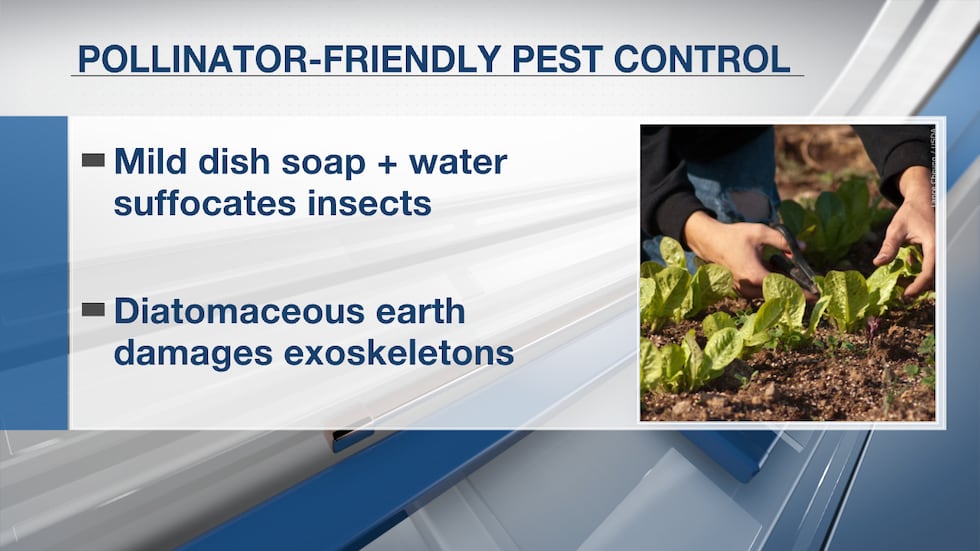
For gardeners looking to manage pests without harming pollinators, several options are available.
A spray made from mild dish soap and water — about one teaspoon per quart — suffocates soft-bodied insects on contact.
Diatomaceous earth is a food-grade powder made from fossilized algae that damages the exoskeletons of crawling insects such as beetles and ants.
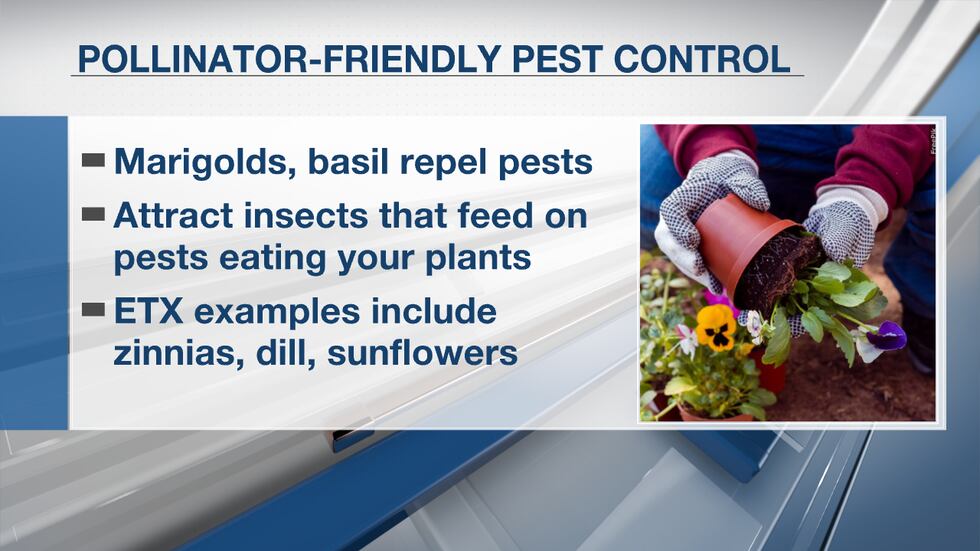
Another option is companion planting.
Marigolds and basil, for example, can repel pests with their strong scent.
Gardeners can also plant species that attract insects like wasps and ladybugs, which feed on common garden pests.
In East Texas, those include dill, zinnias and sunflowers — these plants also support pollinators.
The best companion plant will vary depending on what is already in the garden.
Researching which plants pair well together before planting is recommended.
Copyright 2026 KLTV. All rights reserved.