25 Years Later: East Texas doctor recalls responding to 9/11 terror attacks
Dr. Korniyenko said he helped evacuate victims before the towers collapsed
TYLER, Texas (KLTV) - An East Texas doctor says he was blocks away when the World Trade Center towers fell on Sept. 11, 2001.
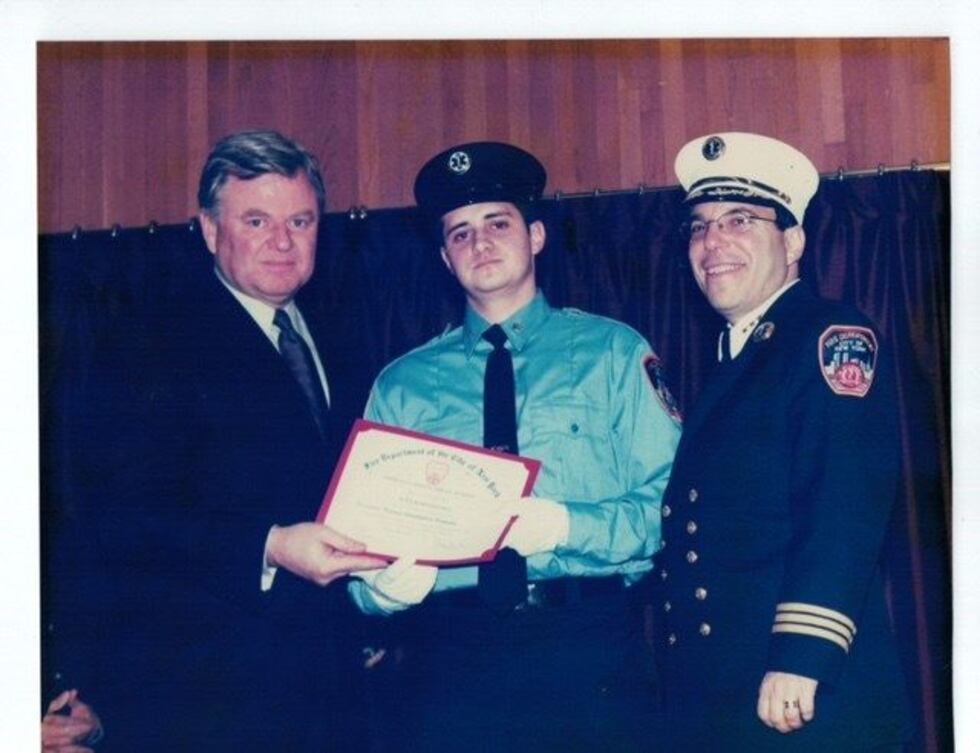
Dr. Alex Korniyenko, who now works for UT Health East Texas, said he became a firefighter and paramedic in 2001. Three months into the job, he responded to the Sept. 11 attacks.
“It’s one of those events that you’ll never forget,” Korniyenko said. “It’s like you watch some major impactful event or something happening and it just permanently sticks with you.”
Waking up to the attack
Korniyenko said the north tower was on fire when he looked out the window of his Manhattan apartment. He checked his phone and saw multiple messages telling him to report for a deployment and return to his battalion.
“First thing I’m looking at is the burning building,” Korniyenko said. “You kind of try to catch yourself like, what is going on?”
Korniyenko said the messages told him the north tower was hit at 8:46 a.m. He got in his vehicle and drove to his battalion.
“You immediately can smell it burning diesel, like the air quality instantly changed,” he said. “You could feel the energy and the whole ambience of something very emergent evolving.”
According to Korniyenko, he and his battalion headed to the Battery Tunnel, also known as Hugh L. Carey Tunnel. As they entered the tunnel, the south tower was struck at 9:03 a.m.
“It was very unsettling because, imagine you just graduated as a firefighter paramedic. You were taught what to do, how to respond, but now you’re responding to an event that even your senior lieutenants have never been part of,” said Koriyenko. “And you look at their faces and they look at you and they say, ‘I think we’re going to be okay,’ but there’s no certainty that we are going to be okay because everybody is thinking, ‘Well, are we under attack?’”
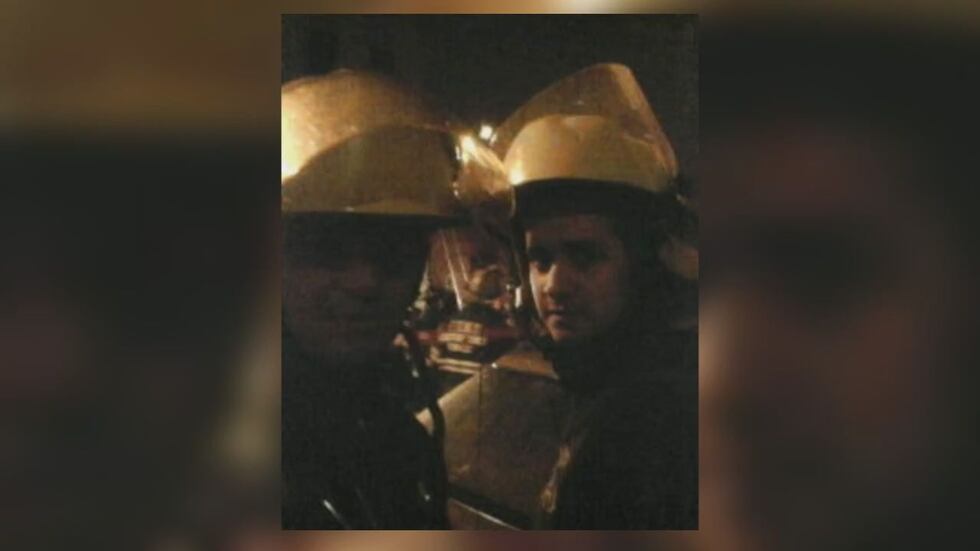
Entering the scene
Korniyenko said he and his team were among the first responders to arrive, ahead of what he estimated was more than 3,000 sanitation workers, NYPD officers and other first responders.
He said responders were told it was a terrorist attack and that the buildings were expected to withstand the damage and not collapse, so it was safe to enter.
“So with that kind of accelerated the magnitude of the disaster that we faced,” Korniyenko said. “All the rescue workers grabbed their bags and ran straight into the staircases and tried to grab as many people as they could just to massively, massively try to evacuate.”
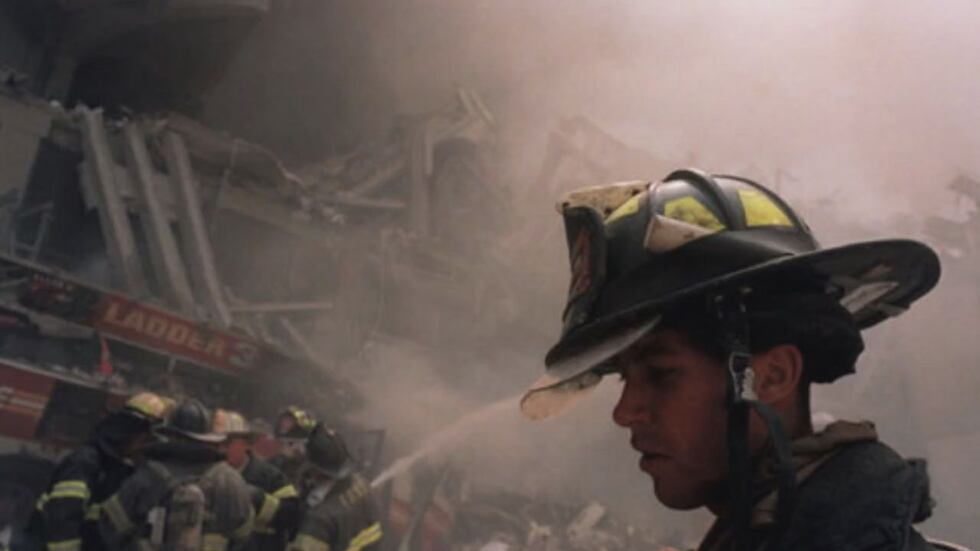
He said the north tower then collapsed floor by floor. At that point, Korniyenko said the mission changed from rescue to survival.
“If you cannot get to your patients or to help somebody, you’re not providing any good as well,” he said. “So at that point, we became part of the mission to save ourselves and shelter, because all that debris was polarized glass, flying and pretty much destroying everything on its path.”
Korniyenko said he was about one block away from the tower when it collapsed. He said he and others took shelter inside a jewelry store, closing the door and getting under a table.
“You hear this wave of power and tremble, going through like an earthquake, and it gets quiet,” he said. “And a few minutes after that quiet noise, you start hearing alarms, firefighters, masks, notifying you that they’re not moving.”
Korniyenko said firefighters’ masks are equipped with alarms that sound when a firefighter stops moving.
“All what you’re hearing, hundreds of fire masks, alarms going off,” he said. “The only time that alarm would go off is when the patient or the person that the firefighter goes limp.”
He said they stayed in the store for 30 to 40 minutes.
“First thing, safety. You touch your legs, you touch your arms. Make sure they’re still attached to you,” Korniyenko said. “Followed by looking for your partner. And you reach out and you shake them, and you pray that they’re still alive.”
He said radio communication went down when the towers collapsed as the towers held radio transmitters. Responders later used Nextel devices to communicate.
Korniyenko said he continued working through the night.
He said some firefighters had asthma attacks from dust and debris exposure. Around 1 a.m., he said he brought several firefighters to the hospital, which he said marked the end of his shift for that day.
“It was definitely overwhelming, stressful,” Korniyenko said. “I can’t tell if anybody really prepared for something like this, but in moments like that, you apply your training and you go on that autopilot where it becomes a very simple mission, and it’s so difficult to process.”
Losses within the department
Korniyenko was with Battalion 47, based in Far Rockaway, a neighborhood in Queens. He said it took him time to arrive at the scene, which he believes is part of why he survived.
“The first 240 rescue workers, unfortunately, were not that lucky, because they got caught in that debris and they were not fortunate to come back home,” Korniyenko said. “I knew 240 of them, and plus the families and their children and their wives. It’s a community.”
343 FDNY members died on 9/11.
Korniyenko said his contact list from that time has shrunk from hundreds of people to about a dozen, largely due to deaths from medical illnesses over the years.
“That contact book shrunk over the years from hundreds of contacts to maybe a dozen,” he said, “predominantly driven by death, demise due to medical illnesses.”
Copyright 2026 KLTV. All rights reserved.