When ‘I’ll never put you in a home’ meets real-life caregiving
Promises made out of love can change as health, safety, money and caregiver capacity change
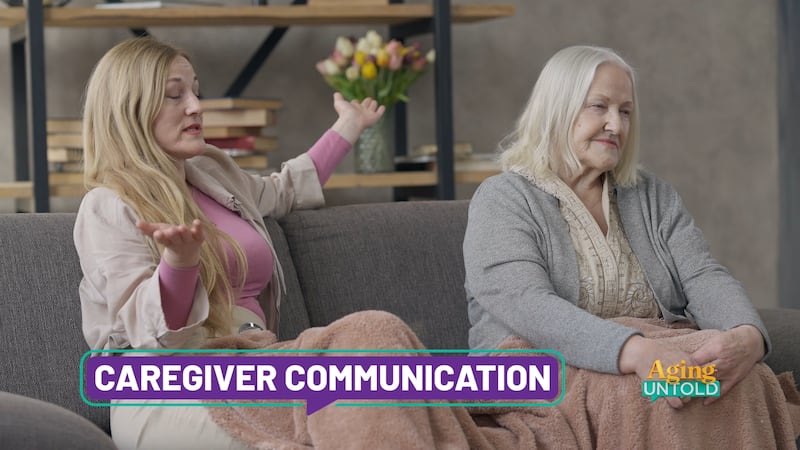
(Aging Untold) — Caregiving promises are sometimes made during emotional moments. When a loved one says, “I’ll never put you in a home,” or “You can always live with me,” the words may come from love, but health, safety, money and caregiver capacity can change over time.
The Aging Untold experts explain why families may feel guilt or pressure later and what to say instead.
Why promises can create pressure
Families often make promises before they have talked through what caregiving could involve, Amy O’Rourke, an aging expert, said.
“They haven’t looked at the reality and talked about the reality at first,” O’Rourke said. “You know, ‘I’ll take care of you.’ But if these certain things happen, we’re going to have to have another conversation.”
She said the questions can be practical:
Can we afford the care?
What if you have care that takes heavy lifting and I can’t do it?
A resident’s needs changed
O’Rourke shared an example from her own work with a man who had significant memory impairment. He had told his daughter not to put him in “one of those places.”
“I talked to the daughter, and over time, this isn’t the only time it’s ever happened, we moved him into a memory facility,” O’Rourke said. “He became ‘the mayor.’ He’s the most popular guy. He was happy. And the daughter was blown away.”
O’Rourke said she has used that example with other families.
“What their needs were at one point might change,” O’Rourke said. “And so you have to change with how they change.”
Most family caregivers aren’t trained
Gerontologist “Sam” Cradduck said most family members aren’t trained to be caregivers. Instead, the training usually comes from parenting children.
“Now you’re going to try and translate that level into an adult and understanding the complexities of the relationship, the history of the relationship, the disease progressions and what it’s like to change an adult versus changing someone much smaller,” Cradduck said.
What to say instead
Cradduck said caregivers need to be fair to themselves and suggested wording along these lines:
“Listen, I promise to do the best by you and keep you here as long as my skillset and the affordability allow. But if something changes along the way, I’m going to have to change the plan.”
“Staying at home is always going to be what you want, but it may not be the safest place and it may not be the best place.”
“We have to be honest with our family members and that’s tough,” Cradduck said.
Have the conversation early
Dr. Rhea Rogers, a board-certified physician, said to have the conversation ahead of time.
“The biggest thing to do is have that conversation early, not in the time of a crisis,” Rogers said. “Love is going to be tested by illness and caregiving and finances.”
And over the years, needs and views can shift, she said.
“The discussion that you have when you’re 35, your needs are going to change at 65,” Rogers said. “You may be at a different point in terms of medical history at that point too. So that conversation needs to change as things change.”
When a loved one asks for a promise
Aging well coach Katherine Ambrose said the request to make promises is common.
“This is not an uncommon promise to make,” Ambrose said. “I find many seniors will say, ‘Promise me you’ll never put me in one of those homes.’ But I think a lot of times that’s because they can’t imagine what might be coming down the pike.”
Ambrose said a community might work out well, as in O’Rourke’s example.
“When the scope of care changes, it may not be possible and then it’s OK to say we might need to adjust,” Ambrose said. “Sometimes the loved one might not be a part of that conversation anymore, but you can only do what you can do.”
Ambrose suggested asking: “Knowing where you’re at now, what is going on now? Is this what your mom or your dad would still want for you?”
Key takeaways
- Talk about the reality up front.
- Needs can change.
- Make a promise you can keep.
- Start early and revisit it.
Copyright 2026 Gray Media Group, Inc. All Rights Reserved.